How to Spot Structural Damage in a Johannesburg Home
Why Structural Damage Matters in Johannesburg
Structural damage in a home means problems with the parts that keep the building stable and safe: the foundations, walls, roof, slabs and supporting beams. In the context of structural damage SA, spotting early warning signs in your Johannesburg property can save you a lot of money and stress.
Homes in Johannesburg and greater Gauteng face particular challenges:
- **Expansive clay soils** that swell in the rainy season and shrink in dry spells. - **Intense summer thunderstorms** and heavy downpours. - **Occasional droughts** that dry and shrink the ground. - **Older building stock** in some suburbs, built before current standards were common.
If early warning signs are ignored, minor house cracks or slight movement can turn into serious foundation problems Johannesburg homeowners struggle to fix. In the worst cases, safety can be compromised and repairs become very costly.
This guide walks you through practical, visual checks you can do yourself, what is normal versus worrying, and when to call a structural engineer Johannesburg or a qualified inspector for a professional opinion.
---
Understand the Local Risk Factors in Johannesburg
Expansive clay soils and movement
Much of Gauteng, including large parts of Johannesburg, is built on **expansive clay soils**. These soils:
- **Swell when wet** (after heavy rains or plumbing leaks). - **Shrink when dry** (after a long, dry winter or drought).
This constant swelling and shrinking can make the ground under your foundations move. That movement shows up as cracks, sticking doors, or uneven floors.
Sloping stands, cut-and-fill, and drainage
Many Johannesburg homes are on **sloping stands** or have been built on **cut-and-fill platforms** (where soil was cut from one area and placed in another to create a level building platform). Risks include:
- **Poor compaction** of filled ground leading to settlement. - **Water running towards the house** instead of away, especially on steep sites. - **Erosion** where stormwater is not properly controlled.
Poor drainage around the house is a major contributor to structural stress. Water pooling near foundations or leaking stormwater pipes can wash away supporting soil.
Older vs newer building standards
South African building standards and NHBRC requirements have improved over time. In some older suburbs:
- **Foundations may be shallower** than those used today. - **Reinforcement may be minimal** by modern standards. - **Additions and alterations** may not always have been designed by professionals.
That does not mean older houses are unsafe, but it does mean you should pay extra attention to patterns of cracks and movement.
Normal movement vs real concern
Almost every house in Gauteng will show **some minor movement** over time. Hairline cracks in plaster or small gaps at skirtings can be normal. What matters is:
- **Severity** (how wide, how long, how many). - **Pattern** (isolated vs repeated in several places). - **Change over time** (stable vs getting worse).
The rest of this article focuses on how to judge those signs.
---
Cracks in Walls and Floors: What’s Normal and What’s Not
Common types of house cracks Gauteng owners see
Cracks can look alarming, but not all are serious. Look for them on interior and exterior walls, around doors and windows, at corners, along brick mortar joints, ceilings and floor slabs.
Some typical crack types:
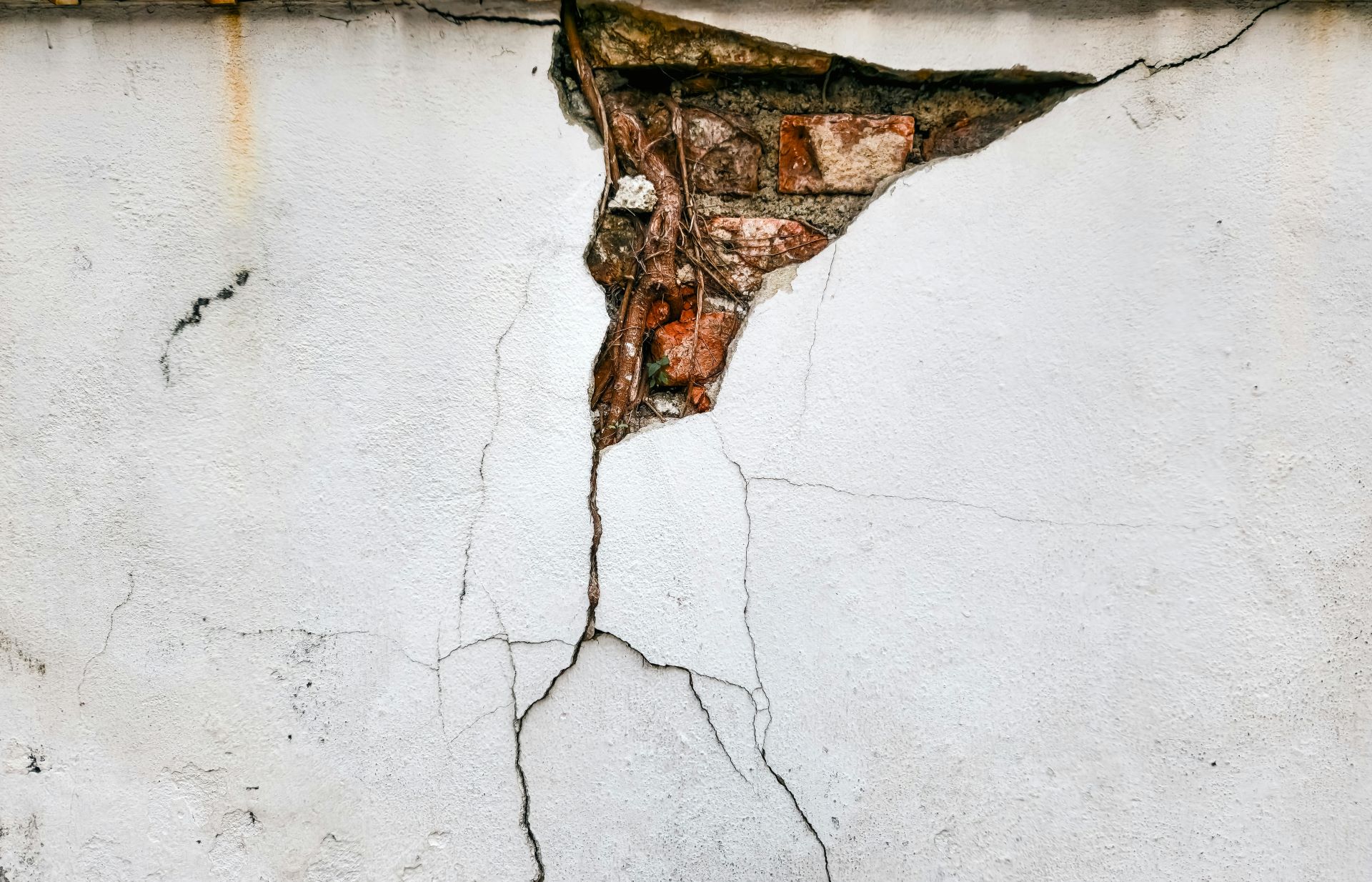
- **Hairline plaster cracks** Very fine, often less than 1 mm wide, usually in the plaster only. These often come from normal shrinkage of plaster or minor movement.
- **Vertical cracks** Cracks running straight up and down. If narrow and in plaster only, they may be cosmetic. If they run through brickwork and are wider, they may be more serious.
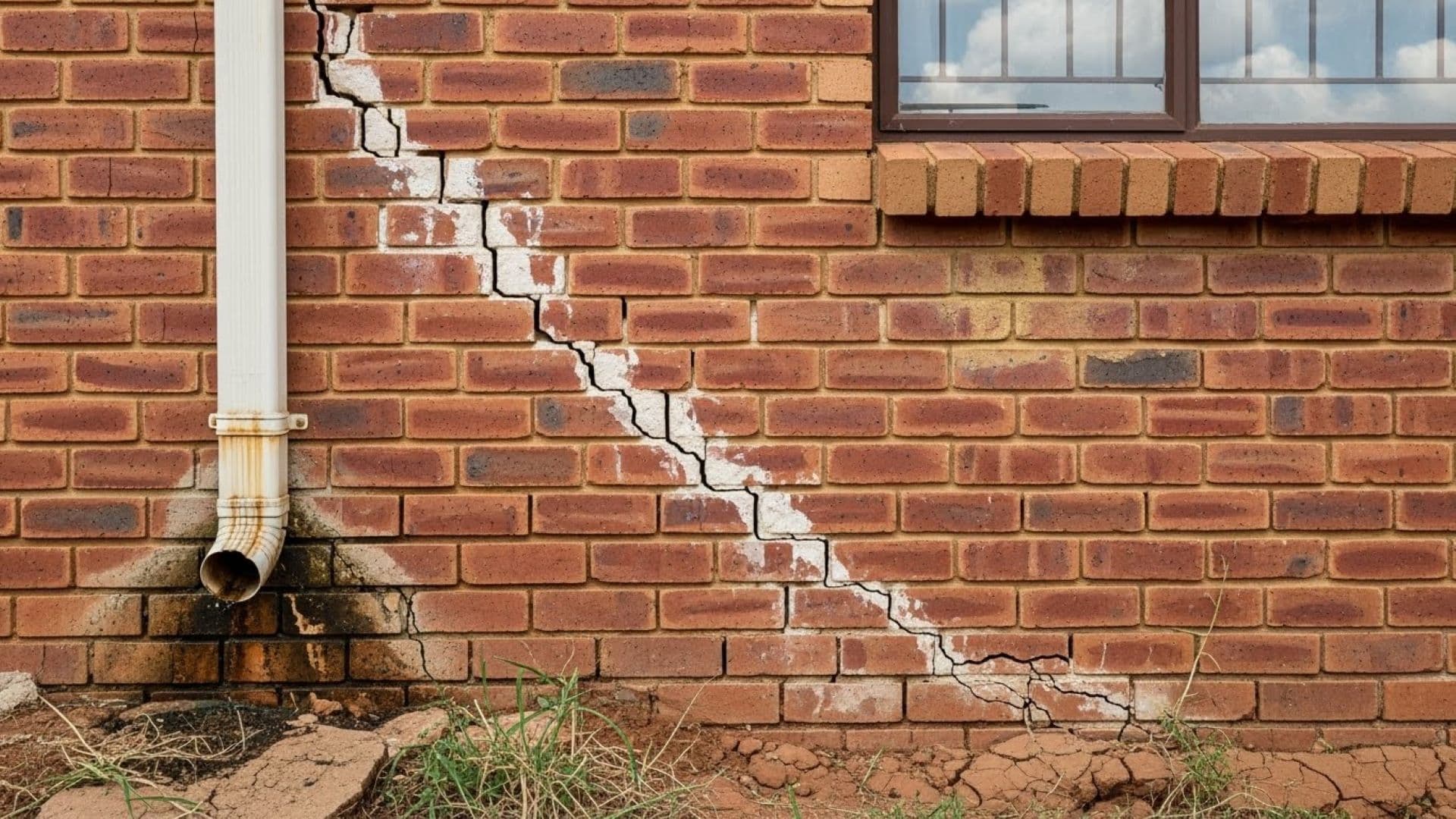
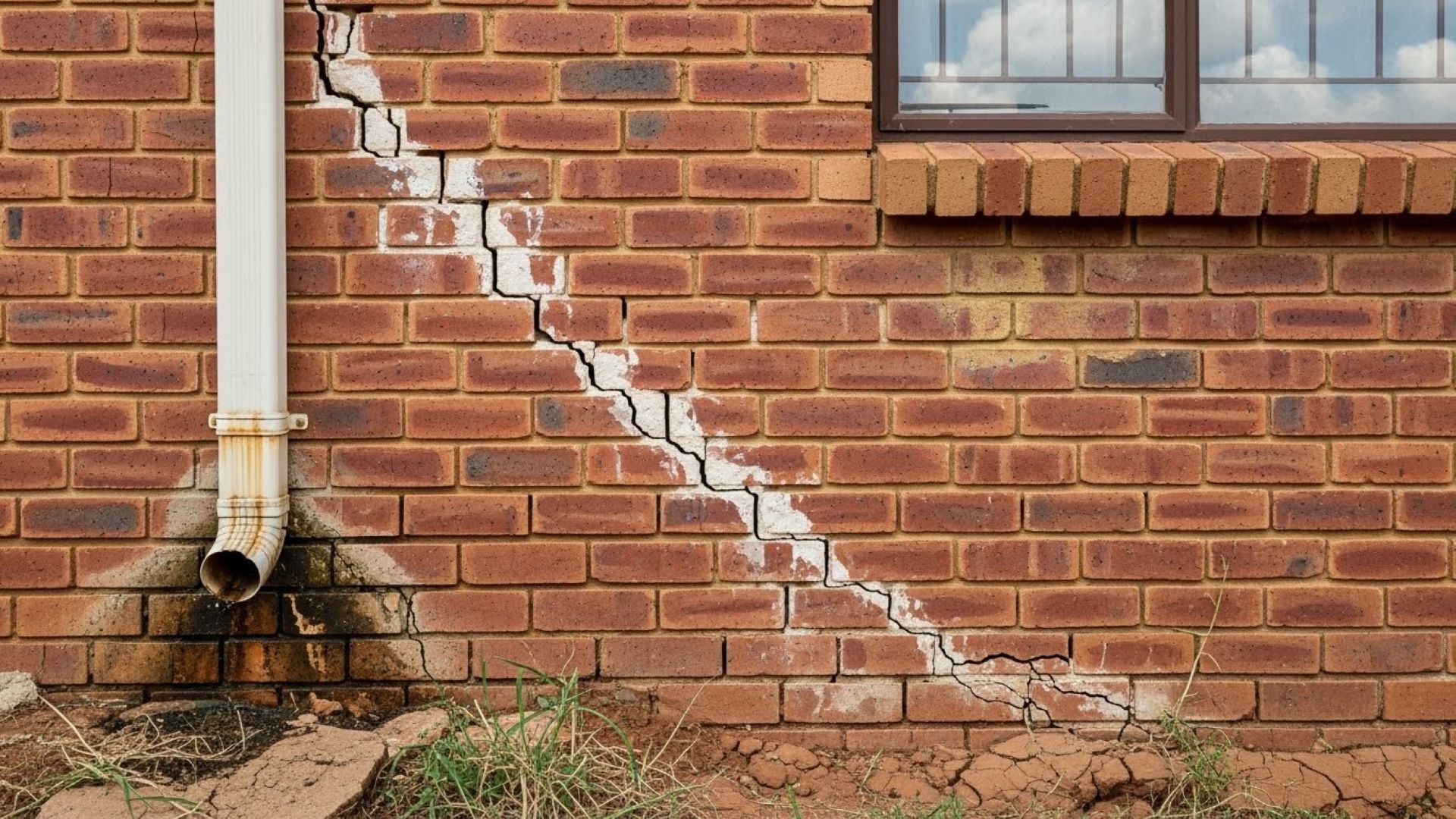
- **Diagonal or stepped cracks** Cracks running at an angle, often from the corners of doors and windows, or stepping along the mortar joints of brickwork. These can indicate **differential settlement** – one part of the foundation moving more than another.
- **Horizontal cracks** Cracks running roughly level, especially along the line of the **damp-proof course (DPC)** or in the middle of a wall. These can be more concerning, as they may relate to lateral movement or moisture problems.
Simple rules of thumb
Use these as **guides**, not strict rules:
- **Cosmetic cracks:** - Hairline cracks in plaster that **do not change over time** are often cosmetic. - A single small crack above a door in an otherwise stable wall may just be shrinkage.
- **Potentially structural cracks:** - **Diagonal or stepped cracks** from window/door corners, especially **wider than about 2–3 mm**, can point to foundation movement. - **Horizontal cracks** in brickwork or at DPC level may indicate more serious issues, including moisture-related damage. - Cracks that are **wider at the top than the bottom (or vice versa)** can indicate parts of the building settling at different rates.
- **Multiple cracks in different areas:** Several large cracks in different parts of the house, especially near corners and openings, are a red flag that deserves professional assessment.
Monitoring cracks over time
Instead of guessing, **monitor**:
- **Mark and date:** Lightly mark the ends of a crack with a pencil and write the date. - **Photograph regularly:** Take clear photos every few months from the same spot. - **Watch for change:** If the crack lengthens, widens, or new cracks appear nearby, call a specialist.
Johannesburg homes often show new or widening cracks after a **very dry winter followed by heavy summer rains**, when clay soils swell again. That seasonal pattern is important information for an engineer.
---
Foundation Movement and Uneven Floors
What is foundation movement?
Foundation movement happens when the soil supporting your foundations **sinks (subsides)** or **lifts (heaves)**. In Gauteng this is often due to:
- **Expansive clay soils** reacting to moisture changes. - **Poorly compacted fill** under parts of the house. - **Leaking water pipes** undermining soil. - **Poor drainage** and water flowing along foundations.
Practical signs to look for
Indoors and outdoors, check for:
- **Sticking doors and windows** Doors or windows that suddenly start jamming, scraping, or not closing properly can signal that frames are going out of square due to movement.
- **Gaps at skirting or ceilings** New gaps appearing between **skirting boards and floors**, or between **walls and ceilings**, especially if they grow over time.
- **Sloping or uneven floors** - A feeling that you are walking “downhill” in a room. - Rolling a small ball or bottle on the floor and seeing if it moves on its own. (This is a rough check, not a precise test.)
- **Visible gaps at foundations** Outside, look for gaps between the **bottom of walls and the ground**, or visible undermining where soil has washed away.
Subsidence vs heave
- **Subsidence:** The ground moves **downwards**, often due to loss of support (e.g., leaking pipes, erosion, or consolidation of fill).
- **Heave:** The ground moves **upwards**, often due to swelling of clay soils when they get wetter than before (for example, after planting thirsty trees or changing drainage).
Both are serious. Foundation issues are **not DIY problems**. They usually require input from a structural engineer and sometimes a geotechnical engineer to diagnose and design a proper repair.
---
Sagging Roofs, Beams, and Ceilings
Why the roof structure matters
Your roof does more than keep out the rain. The **roof trusses, beams, and supporting walls** work together to stabilise the building. Problems here can lead to:
- Cracks in walls and ceilings. - Roof leaks and water damage. - In extreme cases, partial collapse.
Visual signs of trouble
From safe positions on the ground:
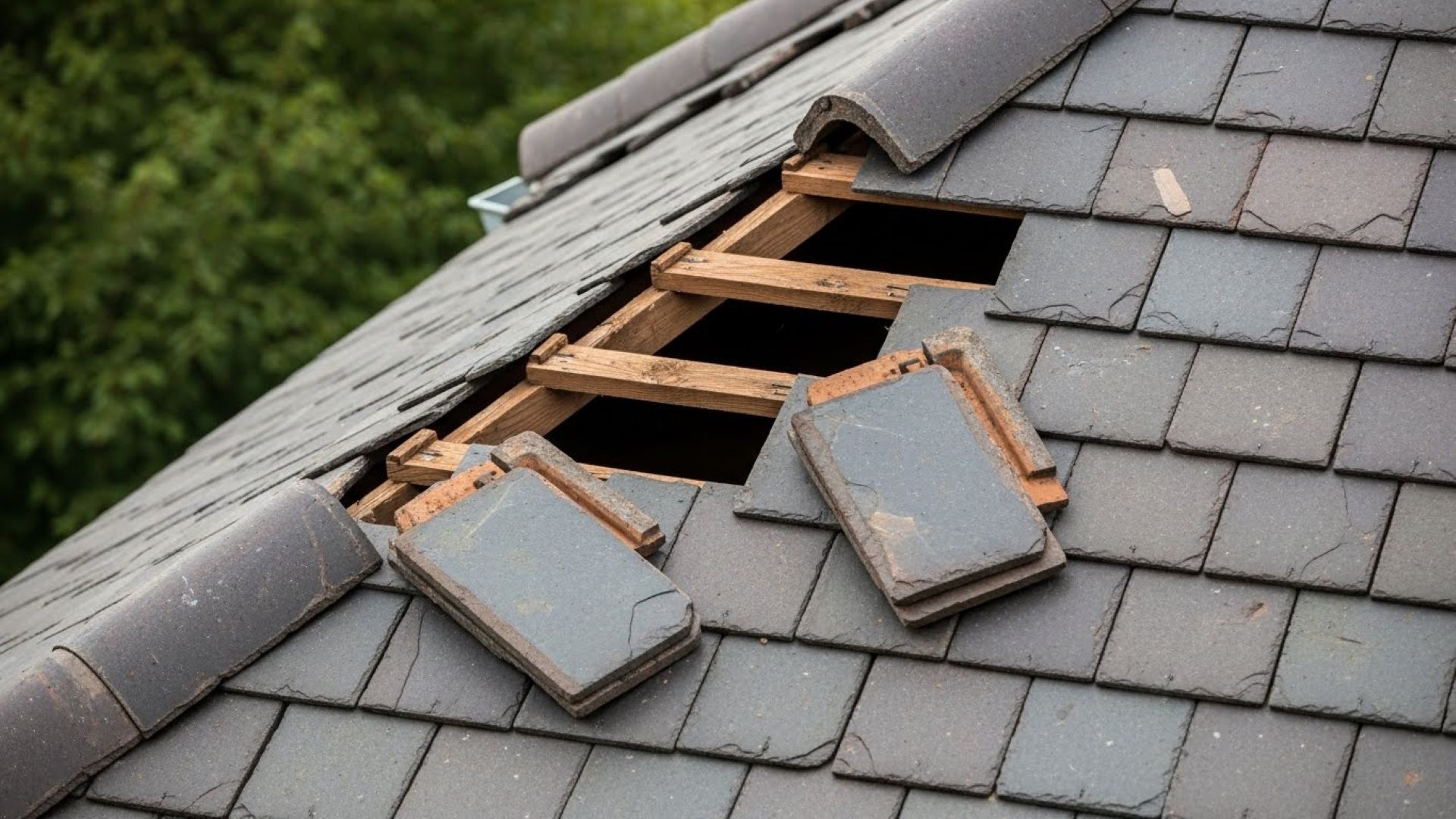
- **Wavy or sagging roof line** Stand back on the pavement and look along the ridge of the roof. A **noticeably uneven or sagging line** can indicate truss or beam problems.
- **Sagging ceilings** Ceilings that bow downwards, especially in the centre of rooms or under heavy roof areas, may suggest overloading or failing support.
- **Cracks at beams and lintels** Cracks radiating from the corners of **beams or lintels** (the horizontal elements above doors and windows) can indicate that they are overstressed or that supports have moved.
- **Door problems after roof work** Doors suddenly catching at the top or bottom after **roof alterations or new tiling** can be a sign the structure has been overloaded or changed without proper design.
Common local causes
In Johannesburg, issues often arise from:
- **Heavy concrete or clay tiles** on roof structures not designed for that weight. - **DIY alterations** such as removing internal walls to “open up” spaces. - **Removal of load-bearing walls** without installing proper beams designed by an engineer.
Roof spaces can be **dangerous** – there is a real risk of falling through ceilings or tripping on wiring and trusses. Rather than climbing into the roof void yourself, arrange a **professional inspection** if you suspect a problem.
---
Moisture, Damp, and Water Ingress: Hidden Structural Threats
Surface damp vs structural moisture problems
Not all damp is equal:
- **Surface damp** Includes condensation on bathroom walls or minor leaks that are quickly fixed. These are usually maintenance issues.
- **Structural moisture problems** Long-term or repeated moisture in walls, floors, or foundations can weaken materials, cause subsidence, and corrode steel reinforcement.
Signs of problematic damp
Look and smell for:
- **Persistent damp patches** Damp spots, peeling paint, or bubbling plaster, especially **near the floor** or on exterior-facing walls.
- **White, powdery deposits (efflorescence)** This white residue on brick or plaster shows that water is moving through the wall and bringing salts to the surface.
- **Mouldy smells** A musty or mouldy odour, especially in **cupboards against exterior walls**, often points to ongoing damp.
- **Water pooling around the house** After rain, check whether water **stands near foundations**, flows towards the house, or discharges from downpipes too close to the walls.
- **Leaking or broken pipes** Signs like localised soggy patches, sinkholes, or unexplained lush growth can indicate **leaking stormwater or sewer pipes** washing away soil.
Johannesburg-specific moisture risks
Gauteng’s **intense summer storms** can dump a lot of water in a short time. Common local issues include:
- **Blocked gutters** from Jacaranda and other trees, causing overflow onto walls. - **Insufficient stormwater management** on sloping stands, leading to erosion. - **Old or damaged DPCs** in older houses, allowing rising damp.
Over years, this kind of moisture can contribute to **foundation problems Johannesburg** homeowners often face, including subsidence and corrosion of reinforcing steel.
---
Red Flags When Viewing a Property in Johannesburg
When you attend a viewing or do a pre-offer inspection, use this quick checklist:
- **Multiple large cracks** Several cracks wider than a few millimetres in different parts of the house, especially near corners, doors, and windows.
- **Fresh patching or paint** Areas that look recently repaired or painted and **don’t match** the surrounding wall may indicate attempts to hide cracks or damp.
- **Strong damp or mould smell** Particularly in older homes, semi-detached houses, or rooms closed up for long periods.
- **Uneven floors and misaligned doors/windows** Doors that don’t close properly, windows that stick, or visible gaps around frames.
- **Sagging roof lines or patched roof tiles** Obvious dips in the roof or many mismatched replacement tiles.
- **Poor site drainage** Water marks on lower walls, eroded soil, or signs of **standing water near foundations**.
These are **prompts for further investigation**, not automatic deal-breakers. Wherever possible, include a **structural inspection clause** in your offer to purchase so a qualified professional can assess any concerns.
---
When to Call a Structural Engineer or Specialist
Not every crack or damp patch is an emergency. But you should call a structural engineer Johannesburg or reputable home inspector if you notice:
- **Cracks wider than a few millimetres**, especially if they are growing or appear in multiple locations. - **Several doors or windows suddenly jamming** in different rooms. - **Noticeable floor slopes** or new gaps between walls and ceilings/floors. - **Persistent or severe damp** that does not improve with basic maintenance (clearing gutters, fixing obvious leaks).
What to expect from a professional assessment
In a typical South African assessment, a structural engineer or experienced inspector will:
- **Walk through the property**, inside and out, noting visible defects. - **Ask about history** – when cracks appeared, seasonal patterns, past repairs. - **Check drainage and site conditions**, including slopes and water flow. - **Recommend further investigations** if needed (for example, exposing foundations or testing soil). - **Provide a written report** with findings and recommended actions.
In South Africa, engineers are registered with **ECSA (Engineering Council of South Africa)**. You are entitled to ask about **qualifications, registration, and experience** with residential work and local soil conditions.
Early intervention is almost always **cheaper and safer** than waiting until damage worsens.
---
Practical Maintenance Tips to Reduce Structural Risk
You cannot change the soil under your home, but you can manage risk:
- **Maintain good drainage** - Keep gutters and downpipes clear. - Extend downpipes to discharge water well away from foundations. - Fix roof leaks and plumbing leaks promptly.
- **Control moisture near foundations** - Avoid large new garden beds or heavy irrigation directly against walls. - Do not allow water features or ponds to leak near foundations.
- **Be cautious with renovations** - Never remove walls or cut big openings without confirming if they are **load-bearing**. - Get proper engineering design for beams and alterations.
- **Monitor and record movement** - Keep a simple log with dates and photos of cracks or sticking doors. - Note seasonal patterns (e.g., worse after heavy rains).
- **Schedule periodic inspections** Older properties, houses on steep or problematic sites, or homes with a history of movement benefit from **periodic professional checks**.
---
Stay Alert, Not Alarmed
Most Johannesburg homes experience **some movement and minor cracking**, especially on expansive clay soils. The goal is not to panic at every hairline mark, but to recognise **worrying patterns** early.
Keep an eye on four main areas:
- **Cracks** in walls, ceilings, and floors. - **Foundation movement** and uneven floors. - **Roof, beams, and ceilings** for sagging or distortion. - **Moisture and damp** that persist or keep returning.
Use this guide as a reference during routine checks of your own home or when viewing properties in Gauteng. When in doubt about possible structural damage SA conditions can cause, consult a **qualified structural engineer or home inspector** in Johannesburg or the wider Gauteng area.
**Disclaimer:** This article provides general information only and is not a substitute for an on-site assessment by a qualified professional. Always seek expert advice for specific concerns about your property.